
Understanding the Impact of Deep Learning on Real-World NLP Applications
9 min read
08 Jun 2026
 By Prince Matthews
Deep learning has transformed natural language processing (NLP) from rule-based systems into powerful, context-aware technologies used in everyday tools. From chatbots and search engines to healthcare documentation and fraud detection, deep learning enables machines to understand and generate human language with increasing accuracy, making it a core driver of modern digital experiences.
The Evolution of NLP: From Rules to Deep Learning
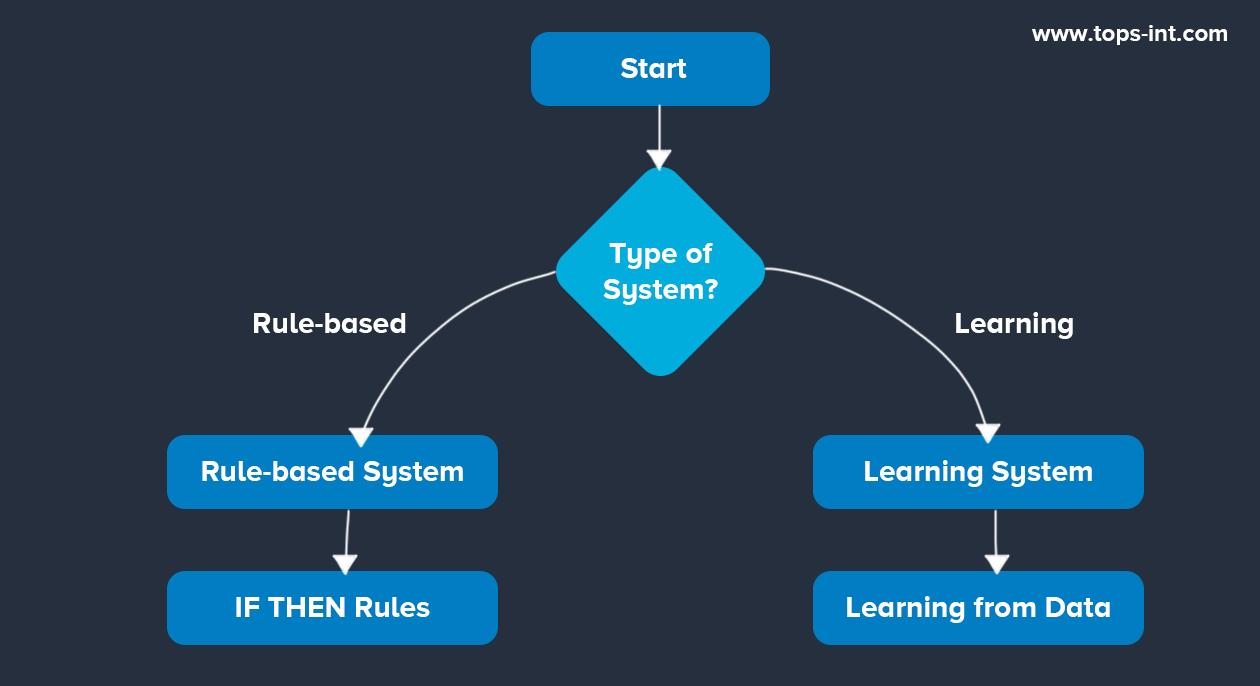
Natural language processing has undergone a major transformation over the past two decades. Early systems relied on rigid, rule-based logic and basic statistical models, requiring manual programming for every linguistic scenario. These approaches struggled with context, ambiguity, and scalability, limiting their effectiveness in real-world applications.
The rise of deep learning introduced a new approach. Instead of relying on predefined rules, models began learning directly from large volumes of data. Neural networks—especially recurrent neural networks and later transformer architectures—enabled machines to process language in a more dynamic and context-aware way. This shift significantly improved accuracy and adaptability.
How Deep Learning Powers Modern NLP Systems
Deep learning models work by training neural networks on massive text datasets. These systems learn patterns, relationships, and contextual meanings within language, allowing them to generate and interpret human-like text. Techniques such as word embeddings convert language into numerical representations, enabling machines to understand semantic relationships.
Attention mechanisms further enhance this capability by allowing models to focus on the most relevant parts of a sentence. Combined with pretraining and fine-tuning, deep learning models can be adapted for a wide range of tasks, from translation to sentiment analysis. This flexibility is a key reason why NLP systems are now widely deployed across industries.

Real-World Applications of Deep Learning in NLP
Deep learning-driven NLP is deeply embedded in everyday technologies. Businesses and consumers interact with these systems regularly, often without realizing it. One of the most visible applications is conversational AI, where chatbots and virtual assistants provide customer support, answer questions, and automate routine tasks.
Search engines also benefit from deep learning, moving beyond simple keyword matching to understanding user intent. This enables more accurate and relevant results, particularly for complex or conversational queries. In healthcare, NLP tools help analyze medical records, summarize clinical notes, and support decision-making processes.
Financial institutions use NLP to detect fraud, monitor transactions, and ensure compliance by analyzing communication patterns. Similarly, content creation tools leverage deep learning to generate summaries, assist with writing, and streamline documentation workflows. These applications demonstrate how NLP is improving efficiency and accessibility across sectors.
Why Deep Learning Outperforms Traditional NLP Methods
The key advantage of deep learning lies in its ability to understand context at scale. Traditional models often relied on surface-level patterns, making them less effective when dealing with nuanced language. Deep learning models, on the other hand, analyze entire sentences and documents, capturing deeper meaning and relationships.
This allows them to handle ambiguity more effectively. For example, a deep learning model can distinguish between different meanings of the same word based on context, improving accuracy in tasks such as translation and sentiment analysis. Additionally, these models continuously improve as they are exposed to more data, making them highly adaptable.

Benefits for Businesses and Professionals
Organizations adopting NLP powered by deep learning experience measurable benefits. Automation of repetitive tasks reduces operational costs, while improved accuracy enhances customer satisfaction. Businesses can extract valuable insights from large volumes of unstructured data, supporting better decision-making.
Professionals across industries are also benefiting. Marketers use NLP tools to analyze customer feedback, legal teams streamline contract reviews, and healthcare providers reduce administrative workloads. These practical advantages make NLP a valuable asset in modern workflows.
Challenges and Limitations
Despite its advantages, deep learning in NLP presents several challenges. One major issue is the need for large datasets, which may not always be available or easy to obtain. Additionally, models can inherit biases from training data, raising concerns about fairness and ethical use.
Another challenge is interpretability. Deep learning models are often considered black boxes, making it difficult to understand how decisions are made. This lack of transparency can be problematic in regulated industries. Computational costs also remain a concern, as training large models requires significant resources.
Future Outlook of NLP Technologies
The future of NLP will likely focus on improving efficiency, accessibility, and ethical implementation. Emerging trends include multimodal systems that combine text, images, and audio, as well as more personalized AI assistants tailored to individual users. Real-time translation and enhanced collaboration between humans and AI systems are also expected to expand.
As adoption grows, the emphasis will shift toward responsible AI development. Ensuring fairness, transparency, and accountability will be critical to building trust and maximizing the benefits of NLP technologies.
Conclusion
Deep learning has fundamentally reshaped natural language processing, enabling machines to understand and generate human language with unprecedented accuracy. Its impact is evident across industries, from customer service and healthcare to finance and content creation. While challenges remain, the continued evolution of NLP promises more efficient, intelligent, and responsible systems that enhance both business operations and everyday user experiences.
FAQs
More Articles
How Deep Learning Is Quietly Reshaping the Future of Natural Language Processing
12 min read | 05 Jun 2026

The Subtle Ways AI Is Influencing Consumer Choices—and What It Means
10 min read | 04 Jun 2026
Why Machine Learning Adoption Is Accelerating Across American Industries
9 min read | 03 Jun 2026

Inside the New Wave of AI Tools Changing How Businesses Make Decisions
10 min read | 02 Jun 2026
More Articles

The Potential of Blockchain in Real Estate: Simplifying Transactions and Ownership
7 min read | 29 May 2026

How Blockchain is Enhancing Intellectual Property Rights and Protection
6 min read | 28 May 2026

The Evolution of Blockchain Consensus Mechanisms: From Proof of Work to Proof of Stake
5 min read | 27 May 2026

Blockchain for Social Good: How Technology is Addressing Global Challenges
7 min read | 26 May 2026