
Inside the New Wave of AI Tools Changing How Businesses Make Decisions
10 min read
02 Jun 2026
 By Prince Matthews
Artificial intelligence is rapidly transforming how American businesses make decisions—moving from intuition-led strategies to data-informed precision. A new generation of AI and machine learning tools is enabling faster insights, better forecasting, and more adaptive operations. This article explores how these tools work, where they’re delivering value, and what leaders should understand before integrating them into critical decision-making processes.
The Shift From Gut Decisions to Data-Driven Intelligence

For decades, business decisions in the United States relied heavily on executive experience, historical trends, and instinct. While those elements still matter, the scale and speed of modern markets have made traditional approaches insufficient.
Today, AI-powered systems analyze massive volumes of structured and unstructured data in real time. These tools don’t just surface information—they identify patterns, correlations, and probabilities that would otherwise go unnoticed.
According to a 2024 report by McKinsey & Company, organizations using advanced analytics and AI are 23 times more likely to acquire customers and 19 times more likely to be profitable compared to their peers.
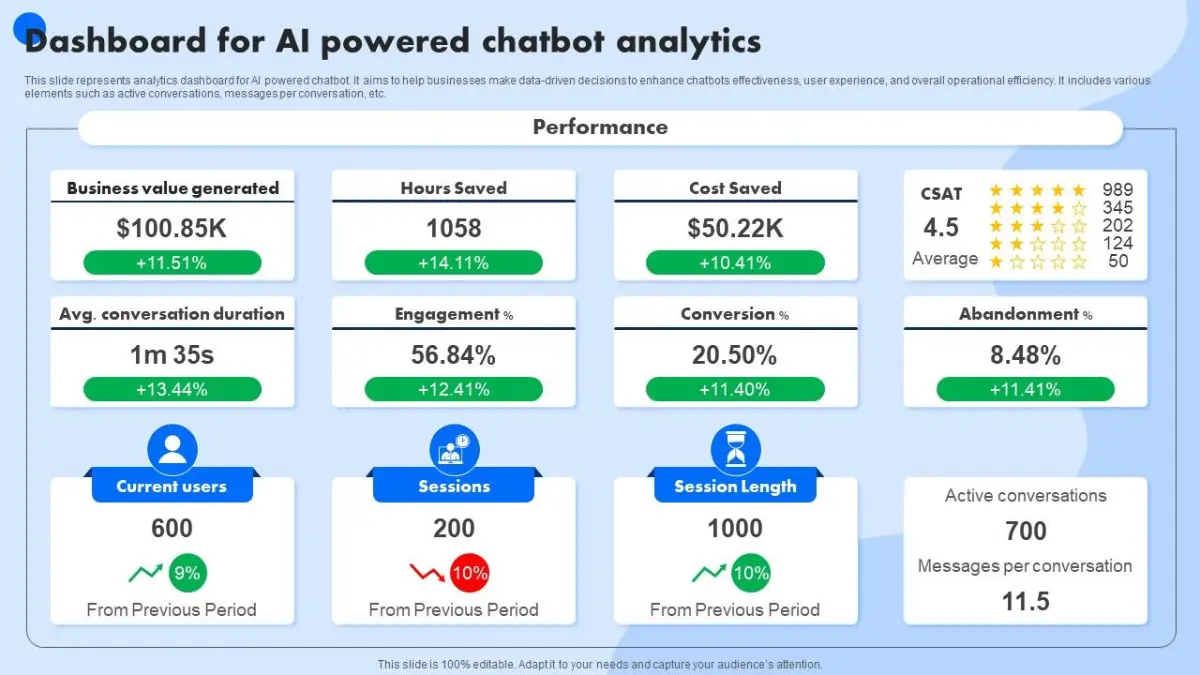
This shift is not about replacing human judgment. Instead, it’s about augmenting it—giving decision-makers stronger evidence, clearer forecasts, and reduced uncertainty.
What Defines the “New Wave” of AI Tools?
The current generation of AI tools differs significantly from earlier analytics platforms. These systems are more adaptive, accessible, and integrated into everyday workflows.
Key Characteristics: - Real-time data processing rather than static reporting - Predictive and prescriptive analytics instead of descriptive insights - Natural language interfaces that allow non-technical users to query data - Automated decision support with scenario modeling - Integration across platforms like CRM, ERP, and financial systems
Tools such as Salesforce Einstein and Microsoft Copilot exemplify this shift by embedding AI directly into tools employees already use daily.
This accessibility is one of the biggest drivers of adoption across U.S. businesses, from startups to Fortune 500 companies.
Where AI Is Changing Business Decisions the Most
1. Financial Forecasting and Risk Management
Finance teams are among the earliest adopters of AI-driven decision tools. Machine learning models can analyze historical financial data, market indicators, and macroeconomic signals to generate more accurate forecasts.

For example, instead of relying solely on quarterly projections, companies now use AI to: - Continuously update revenue forecasts - Detect anomalies in spending patterns - Predict cash flow disruptions
A mid-sized U.S. manufacturing firm, for instance, used AI forecasting tools to reduce budget variance by over 18% within a year—primarily by identifying demand fluctuations earlier.
2. Marketing and Customer Insights
AI has transformed how businesses understand and engage with customers. Instead of broad segmentation, companies can now create highly specific audience profiles based on behavior, preferences, and intent.
Modern tools analyze: - Website interactions - Purchase history - Social media signals - Customer feedback
Platforms like Google Analytics and HubSpot now incorporate machine learning to recommend actions such as: - Which customers are most likely to convert - When to send campaigns - What messaging will resonate
This leads to more efficient marketing spend and improved ROI.

3. Operations and Supply Chain Optimization
Supply chain disruptions during recent years exposed the limits of traditional planning systems. AI tools now help businesses anticipate disruptions and optimize logistics in real time.
Companies are using AI to: - Predict demand spikes or shortages - Optimize inventory levels - Identify alternative suppliers - Improve delivery routing
A U.S.-based retail chain, for example, used AI-driven demand forecasting to reduce excess inventory by 25% while maintaining product availability.
4. Hiring and Workforce Planning
Human resources departments are increasingly turning to AI for talent decisions—not to replace recruiters, but to enhance efficiency and reduce bias.
AI tools can: - Screen resumes based on role requirements - Predict candidate success based on historical data - Identify internal talent for promotion
However, organizations must use these tools carefully. Regulatory scrutiny in the U.S. is increasing, especially around fairness and transparency in hiring algorithms.
5. Strategic Decision-Making at the Executive Level
Perhaps the most significant shift is happening in the boardroom. AI tools are now being used to support high-level strategic decisions.
Executives can simulate scenarios such as: - Entering new markets - Adjusting pricing strategies - Responding to economic changes

These simulations provide probabilistic outcomes, helping leaders weigh risks more effectively.
Why U.S. Businesses Are Accelerating Adoption
Several factors are driving rapid adoption across industries: - Data availability: Businesses now collect more data than ever before - Cloud computing: Scalable infrastructure makes AI more accessible - Competitive pressure: Early adopters are gaining measurable advantages - Workforce expectations: Employees expect smarter, faster tools
According to Gartner, by 2026, over 75% of enterprise decision-making will be augmented by AI, up from less than 30% in 2021.
Common Questions Business Leaders Are Asking
How reliable are AI-driven decisions? AI models are only as good as the data they are trained on. High-quality, unbiased data leads to more reliable outcomes. However, human oversight remains essential.
Do small businesses benefit from AI tools? Yes. Many tools are now offered as affordable SaaS solutions, making them accessible even for small and mid-sized businesses.
Risks and Limitations to Consider
While AI offers clear advantages, it is not without challenges.
Key Risks: - Data bias leading to flawed recommendations - Over-reliance on automation without human validation - Security and privacy concerns - Integration complexity with legacy systems
Businesses that succeed with AI typically adopt a balanced approach—combining automation with human expertise.
How to Evaluate AI Tools for Your Business
Before adopting AI solutions, organizations should take a structured approach.
Key Evaluation Criteria: - Business alignment: Does the tool solve a real problem? - Data readiness: Is your data clean and accessible? - Ease of integration: Will it work with existing systems? - Transparency: Can you understand how decisions are made? - Scalability: Will it grow with your business?
Companies that rush into AI without clear objectives often struggle to see meaningful returns.
Real-World Example: AI in Retail Decision-Making
A national U.S. retailer implemented AI tools to improve pricing decisions. Instead of static pricing strategies, the system adjusted prices dynamically based on: - Demand trends - Competitor pricing - Inventory levels
Within six months, the company saw: - A 12% increase in revenue - Improved inventory turnover - Reduced markdown losses
This example highlights how AI can directly influence bottom-line results when applied thoughtfully.
The Human Element: Why AI Doesn’t Replace Leadership
Despite rapid advancements, AI does not replace human decision-makers. It enhances them.
Human leaders bring: - Context and judgment - Ethical considerations - Long-term vision
AI provides: - Speed - Scale - Analytical depth
The most effective organizations combine both—creating a hybrid decision-making model.
Frequently Asked Questions
1. What are AI decision-making tools? They are software systems that use data, algorithms, and machine learning to support or automate business decisions.
2. Are AI tools expensive to implement? Costs vary widely, but many cloud-based tools offer scalable pricing suitable for different business sizes.
3. Can AI replace business analysts? No. AI enhances analysts by automating data processing, allowing them to focus on strategy.
4. How accurate are AI predictions? Accuracy depends on data quality, model design, and continuous updates.
5. What industries benefit most from AI decision tools? Finance, healthcare, retail, manufacturing, and logistics are among the top adopters.
6. Is AI safe for handling sensitive business data? Yes, if proper security measures and compliance standards are followed.
7. How long does it take to see ROI from AI? Many companies begin seeing measurable impact within 6–12 months.
8. Do employees need technical skills to use AI tools? Not necessarily. Many tools now feature user-friendly interfaces and natural language capabilities.
9. What is the biggest challenge in adopting AI? Data quality and organizational readiness are often the biggest hurdles.
10. Should every business adopt AI now? Not immediately—but every business should evaluate where AI could provide value.
What Comes Next for Decision Intelligence
The next phase of AI in business is not just about better tools—it’s about decision intelligence ecosystems. These systems will connect data, analytics, and human judgment into unified workflows.
We’re already seeing early signs of: - AI systems that explain their reasoning - Tools that collaborate across departments - Continuous learning systems that improve over time
For U.S. businesses, the question is no longer whether to adopt AI—but how to do so responsibly, effectively, and strategically.
Key Insights at a Glance
- AI is shifting decision-making from intuition to data-backed insights
- Modern tools provide real-time, predictive, and prescriptive capabilities
- Adoption is accelerating across finance, marketing, operations, and HR
- Human oversight remains essential for ethical and strategic decisions
- Successful implementation depends on data quality and clear objectives
FAQs
More Articles

AR in Healthcare: From Surgical Navigation to Patient Education
6 min read | 22 May 2026

The Rise of VR Concerts: How Virtual Reality Is Changing Live Music Experiences
5 min read | 21 May 2026

Augmented Reality in Real Estate: Virtual Tours and Property Previews
7 min read | 20 May 2026

The Role of VR in Therapy: How Immersive Technology Is Enhancing Mental Health Treatments
7 min read | 19 May 2026
More Articles

Investors Take Note: The Potential of Blockchain Investments
5 min read | 21 Apr 2026

Blockchain for Entrepreneurs: Building the Future of Business
6 min read | 20 Apr 2026

The Privacy Paradox: Balancing Security with Transparency in Blockchain
4 min read | 19 Apr 2026

Is Blockchain the Key to Unlocking the Sharing Economy's True Potential?
4 min read | 18 Apr 2026