
What the Rise of Artificial Intelligence Means for Jobs, Skills, and the Future of Work
9 min read
03 Jun 2026
 By Sayan Gosh
Artificial intelligence is reshaping how work is performed across industries, influencing hiring needs, workplace skills, and long-term career paths. While AI automates certain routine tasks, it also creates new opportunities for innovation and collaboration. Understanding how AI affects jobs, required skills, and workplace expectations helps individuals and organizations prepare for a future where human expertise and intelligent systems work together.
The Growing Influence of Artificial Intelligence in the Workplace
Artificial intelligence has transitioned from a specialized technology used mainly in research laboratories to a practical tool integrated into everyday business operations. Companies across the United States now rely on AI systems to automate processes, analyze data, and support decision-making.
As this transformation continues, discussions about the future of work have become increasingly important. Workers want to know how AI might affect job opportunities, while employers are evaluating how automation can improve efficiency without disrupting their workforce.
Research from the World Economic Forum suggests that technological change—including artificial intelligence—will transform many existing jobs while also creating new roles that did not previously exist. Rather than eliminating work entirely, AI often changes how work is performed.
Understanding this shift requires examining both the tasks AI can automate and the uniquely human capabilities that remain essential.
Which Types of Jobs Are Most Affected by AI
Artificial intelligence tends to affect tasks rather than entire professions. Jobs that involve repetitive or predictable activities are more likely to be partially automated.
Examples of tasks AI can often handle efficiently include:
Data entry and document classification Basic customer service inquiries Routine financial analysis Scheduling and administrative coordination Pattern recognition in large datasets
For instance, many companies now use AI tools that automatically categorize support tickets or analyze financial transactions for potential fraud. These systems can process thousands of records in seconds.
However, automation rarely removes the need for human employees. Instead, workers shift toward roles that involve problem-solving, oversight, and communication.

Consider the accounting profession. AI software can scan invoices and extract financial information automatically. Accountants then focus on interpreting financial trends, advising clients, and ensuring compliance with regulations.
AI Is Creating New Types of Jobs
While some tasks become automated, the expansion of artificial intelligence has also created entirely new job categories.
Examples of emerging AI-related roles include:
Machine learning engineers Data scientists and analysts AI ethics specialists Automation workflow designers Prompt engineers and AI trainers
These roles did not exist at scale a decade ago. As companies adopt AI systems, they require professionals who can build, manage, and evaluate these technologies.
The U.S. Bureau of Labor Statistics reports that demand for data science and analytics professionals continues to grow rapidly as organizations rely more heavily on data-driven decision-making.
In addition to technical roles, many non-technical jobs are evolving to include AI-related responsibilities. Marketing teams use predictive analytics, healthcare professionals interpret AI-assisted diagnostic tools, and logistics managers analyze AI-generated forecasts.
Why Human Skills Remain Essential
Despite rapid technological advances, artificial intelligence still depends heavily on human expertise. AI systems are highly effective at processing data and identifying patterns, but they struggle with complex social, ethical, and strategic decision-making.
Human abilities that remain difficult to automate include:
Critical thinking and judgment Emotional intelligence and empathy Creative problem-solving Leadership and team collaboration Ethical decision-making

For example, customer service chatbots can answer common questions quickly. However, complex situations—such as resolving disputes or handling sensitive issues—still require experienced human representatives.
Similarly, AI may suggest marketing strategies based on data patterns, but marketing professionals must interpret those suggestions within the broader context of brand identity and consumer relationships.
As AI adoption increases, many experts believe the most valuable employees will be those who combine technical literacy with strong interpersonal and analytical skills.
AI and the Evolution of Workplace Skills
The rise of artificial intelligence is changing the skills employers prioritize. Technical knowledge remains important, but many organizations now emphasize adaptability and digital literacy.
According to research from LinkedIn’s Workforce Report, employers increasingly value workers who can interpret data, collaborate across disciplines, and adapt to new technologies.
Key skills gaining importance in AI-driven workplaces include:
Data interpretation and analytical thinking Digital tool proficiency Strategic planning and problem-solving Communication and storytelling with data Continuous learning and adaptability
Professionals who understand how AI tools function—while also recognizing their limitations—are often better equipped to collaborate with automated systems.
For example, marketing analysts increasingly use AI platforms that identify audience trends and recommend campaign strategies. Analysts who can interpret these insights and translate them into practical marketing plans provide significant value.
The Rise of Human-AI Collaboration
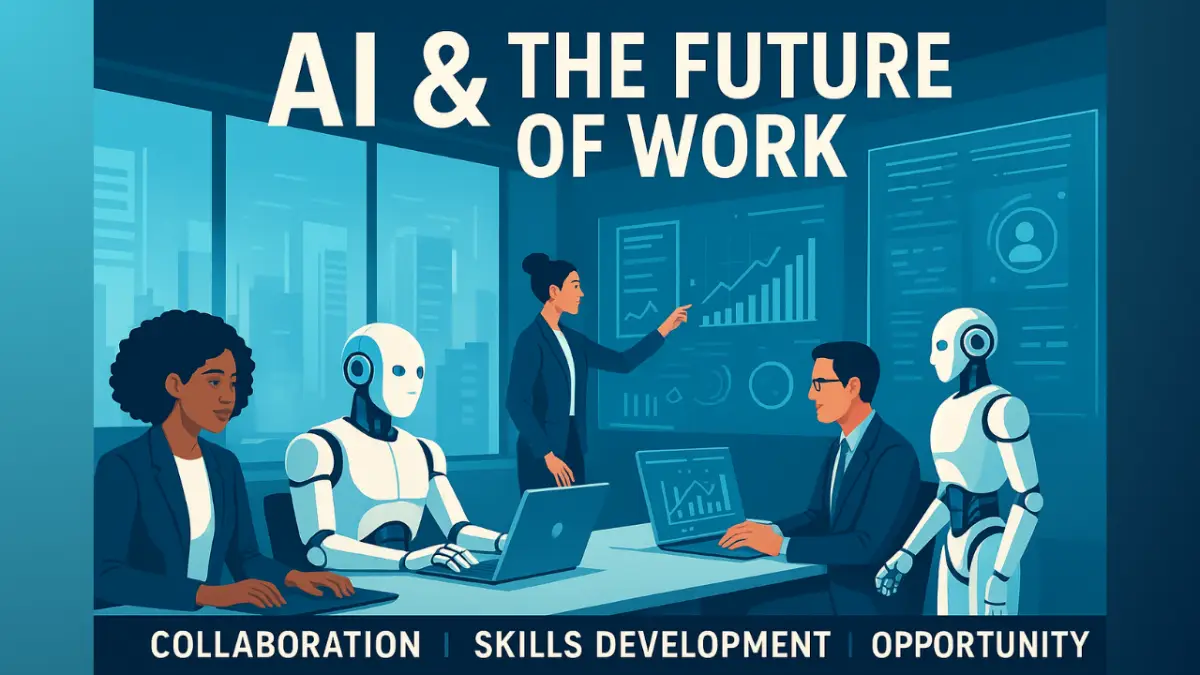
Rather than replacing workers entirely, many organizations are exploring collaborative models where employees work alongside intelligent systems.
In this approach, AI performs tasks that require large-scale data processing, while humans focus on interpretation and strategy.
Examples of human-AI collaboration include:
Doctors reviewing AI-assisted diagnostic results Financial analysts interpreting predictive models Software developers using AI coding assistants Customer support teams managing chatbot interactions
This collaborative model often leads to improved productivity. AI tools reduce the time required to analyze data or complete routine tasks, allowing employees to concentrate on higher-value work.
Companies that adopt this approach often invest in employee training programs to ensure workers understand how to use AI tools effectively.
Preparing the Workforce for AI-Driven Change
As artificial intelligence continues to influence the workplace, education and training programs are adapting accordingly. Universities, professional organizations, and employers increasingly emphasize technology literacy and lifelong learning.
Common workforce preparation strategies include:
Upskilling programs that teach data analysis and automation tools Cross-disciplinary training combining technology and business skills Online learning platforms offering AI-related courses Corporate training initiatives focused on digital transformation
Many organizations now encourage employees to develop familiarity with AI tools even if their primary role is not technical.
For example, HR professionals may learn how to interpret AI-generated workforce analytics, while supply chain managers analyze predictive demand models.
This shift highlights an important reality: understanding AI is becoming a valuable skill across many professions.
Frequently Asked Questions
Will artificial intelligence eliminate most jobs? Most experts believe AI will change many jobs rather than eliminate them entirely. Automation typically affects specific tasks while creating new opportunities for specialized roles.
Which jobs are most likely to be affected by AI? Jobs involving repetitive tasks, data processing, or predictable workflows are more likely to experience automation.
What new careers are emerging because of AI? New roles include machine learning engineers, data scientists, AI trainers, automation specialists, and AI ethics advisors.
Do workers need programming skills to work with AI? Not necessarily. Many AI tools are designed for non-technical professionals, though understanding data and digital tools can be beneficial.
How can employees prepare for AI-driven workplaces? Developing analytical thinking, digital literacy, and adaptability can help workers collaborate effectively with AI technologies.
Are creative jobs safe from automation? Creative roles are less likely to be fully automated because they require originality, storytelling, and cultural understanding.
How are companies training employees to work with AI? Many organizations offer internal training programs and online courses focused on data analytics, automation tools, and digital collaboration platforms.
Is AI regulated in the workplace? Governments are increasingly developing policies addressing AI transparency, worker rights, and ethical technology use.
Will AI increase productivity in the workplace? Many studies suggest that AI tools can improve productivity by reducing time spent on repetitive tasks and enhancing data analysis.
Navigating the Transition to an AI-Augmented Workforce
Artificial intelligence represents one of the most significant technological shifts affecting modern workplaces. While automation may reshape certain job functions, it also opens new opportunities for innovation and productivity.
Organizations that adapt successfully often focus on integrating AI into existing workflows rather than replacing human workers entirely. They also prioritize employee training and responsible technology governance.
Workers who develop both technical awareness and strong human-centered skills are likely to remain valuable contributors in this evolving environment.
The Path Forward: Human Talent in an AI-Enabled Economy
The future of work will likely involve close collaboration between people and intelligent systems. Artificial intelligence can analyze data and automate processes, but human expertise remains essential for interpretation, creativity, and ethical judgment.
For businesses, the challenge is not simply adopting AI technologies but integrating them responsibly while supporting workforce development.
For individuals, the opportunity lies in building adaptable skills and understanding how emerging technologies influence their professions.
The workplaces of the future will likely reward those who combine technological fluency with human insight.
Key Signals Shaping Tomorrow’s Workforce
AI is transforming tasks rather than eliminating entire professions New roles related to data science and AI governance are emerging Employers increasingly value digital literacy and analytical thinking Human-AI collaboration is becoming common in professional environments Continuous learning is essential as workplace technology evolves
FAQs
More Articles

Unlock the Power of Business Intelligence (BI) – The Ultimate Guide
4 min read | 15 Mar 2026

Data Lakes vs. Data Warehouses: Which One Do You Really Need?
5 min read | 14 Mar 2026

10 Incredible Benefits of Cloud Storage You Didn't Know About
6 min read | 13 Mar 2026

Revolutionize Your IT Strategy with Cloud Orchestration – Here’s How!
7 min read | 12 Mar 2026
More Articles

Stablecoins: The Promise of Stability in Volatile Cryptocurrency Markets
4 min read | 25 Mar 2026

Initial Coin Offerings (ICOs): Fundraising in the Age of Cryptocurrency
5 min read | 24 Mar 2026

Double Spending: The Challenge and Solution in Blockchain Technology
3 min read | 23 Mar 2026

Hash Functions in Blockchain: Ensuring Data Integrity and Security
5 min read | 22 Mar 2026