
What the Latest AR and VR Innovations Mean for Work, Learning, and Communication
10 min read
02 Jun 2026
 By Lewis Adam
Augmented reality (AR) and virtual reality (VR) are moving beyond niche applications into practical tools for work, education, and communication. From immersive training environments to remote collaboration and enhanced learning experiences, recent innovations are shaping how Americans interact with digital and physical spaces—offering measurable productivity gains while raising important questions about accessibility, cost, and long-term adoption.
The Shift From Experimentation to Everyday Utility

For years, AR and VR were often framed as emerging technologies with potential rather than proven value. That framing is changing. In 2025 and 2026, advancements in hardware, software ecosystems, and connectivity have positioned immersive technologies as practical tools across industries.
Devices like the Apple Vision Pro and Meta Quest 3 have helped redefine expectations by prioritizing usability, spatial computing, and integration with everyday workflows. Meanwhile, enterprise platforms from companies like Microsoft and NVIDIA are enabling scalable deployments in business environments.
According to industry estimates from International Data Corporation, global spending on AR/VR is expected to surpass $100 billion by the late 2020s, with the U.S. representing a significant share. This growth reflects a shift from experimentation to operational adoption.
How AR and VR Are Transforming Work Environments
Remote Collaboration That Feels More Natural**
Traditional video conferencing has limitations—fatigue, lack of spatial awareness, and reduced engagement. AR and VR are addressing these challenges by creating shared digital environments where participants can interact more intuitively.
In industries such as architecture, engineering, and manufacturing, teams now review 3D models in real time. Instead of screen-sharing, participants can walk through virtual prototypes together, annotate designs, and simulate real-world conditions.

Platforms like Microsoft Mesh enable employees to collaborate using avatars in persistent virtual spaces. While still evolving, these tools are already being used by distributed teams to reduce travel and improve alignment.
Practical Workplace Applications**
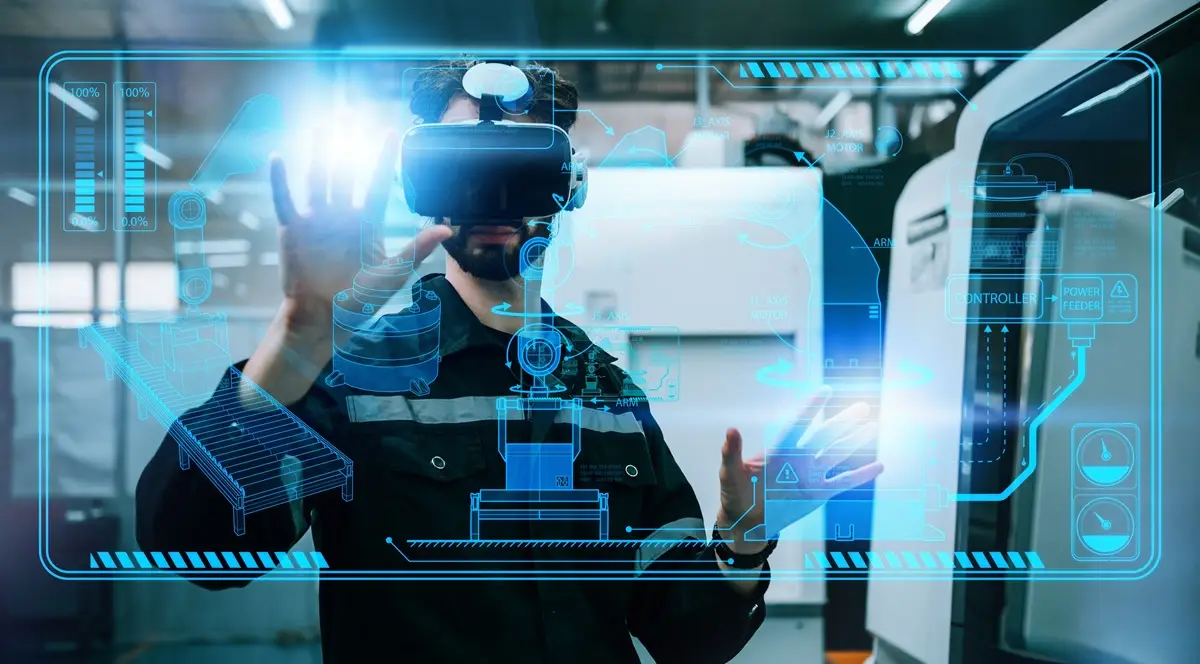
Organizations are adopting AR and VR in targeted, high-impact ways rather than wholesale transformation. Common use cases include: - Hands-on training simulations for manufacturing and healthcare - Remote assistance using AR overlays for field technicians - Design visualization for product development teams - Virtual onboarding environments for new employees
For example, a U.S.-based logistics company may use AR headsets to guide warehouse workers through picking routes, improving efficiency and reducing errors. Similarly, healthcare providers use VR simulations to train surgeons in risk-free environments.
Productivity Gains—and Real Constraints**
While early adopters report productivity improvements, the benefits depend heavily on context. VR meetings are not replacing email or quick calls; instead, they are most effective for complex collaboration tasks.
Challenges remain: - Hardware costs and comfort for extended use - Integration with existing enterprise systems - Training requirements for employees - Privacy and data security concerns
The Evolution of Learning Through Immersive Technology
Making Abstract Concepts Tangible**
In education, AR and VR are helping bridge the gap between theory and experience. Instead of reading about historical events or scientific processes, students can explore them interactively.
A high school biology class, for example, can use VR to explore the human body at a cellular level. Engineering students can test designs in simulated environments before building physical prototypes.
Research from Pew Research Center indicates that immersive learning can improve retention and engagement, particularly for visual and experiential learners.

Expanding Access to Specialized Training**
One of the most practical benefits of VR in education is access. Students and professionals can participate in experiences that would otherwise be limited by geography or cost.
Examples include: - Medical training simulations replicating rare procedures - Vocational training for skilled trades like welding or aviation - Corporate learning programs that scale globally - Soft skills training, such as leadership or conflict resolution
Companies like Walmart have already used VR to train employees in customer service scenarios, demonstrating measurable improvements in performance consistency.
Limitations in the Education Sector**
Despite its promise, adoption in U.S. schools remains uneven. Budget constraints, device management, and teacher training are ongoing challenges. Additionally, not all subjects benefit equally from immersive learning.
The most effective implementations are targeted, supplementing traditional instruction rather than replacing it.
Communication in a Spatial, Digital World
Beyond Screens: A New Communication Layer**
AR and VR are redefining communication by adding spatial context. Instead of flat messages or video windows, users interact in environments that simulate physical presence.
This shift is particularly relevant for: - Remote teams seeking deeper engagement - Global organizations managing distributed workforces - Creative industries collaborating on visual projects
Spatial communication allows for nonverbal cues, shared context, and a stronger sense of presence—all factors that influence understanding and trust.
The Rise of Digital Presence and Identity**
As immersive communication grows, so does the importance of digital identity. Avatars, voice interaction, and spatial positioning are becoming part of how individuals present themselves professionally.
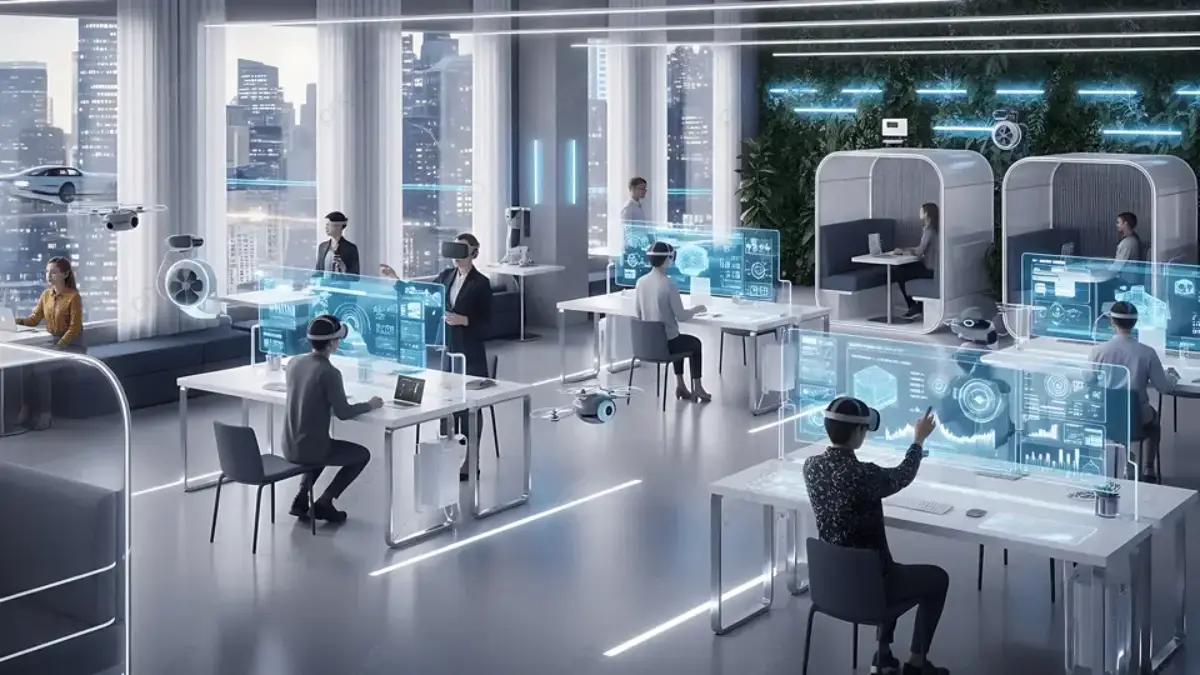
Platforms connected to Meta Platforms are investing heavily in avatar realism and expressive capabilities. While still evolving, these systems aim to make virtual interactions feel more human.
Where Communication Still Falls Short**
Despite progress, AR and VR communication is not yet seamless. Common limitations include: - Lack of universal standards across platforms - Variability in user experience depending on hardware - Social discomfort with avatar-based interaction - Accessibility concerns for users with disabilities
As a result, immersive communication is best viewed as a complement to—not a replacement for—existing tools.
Key Innovations Driving Adoption
Hardware Improvements**
Recent devices are lighter, more powerful, and better integrated with everyday computing. Advances in display resolution, hand tracking, and battery life are making extended use more practical.
Software Ecosystems**
The growth of developer platforms and content ecosystems is expanding use cases. Tools built on engines like Unity and Unreal Engine are enabling more sophisticated applications across industries.
AI Integration**
Artificial intelligence is enhancing AR and VR by enabling: - Real-time language translation in immersive environments - Intelligent virtual assistants - Automated content generation for training simulations
This convergence is making immersive experiences more adaptive and personalized.
What Americans Are Asking About AR and VR
Is AR or VR more useful for everyday work? AR is generally more practical for everyday tasks because it integrates with the physical world. VR is more effective for immersive, focused activities like training or design collaboration.
Are companies actually using AR and VR at scale? Yes, but selectively. Large organizations in retail, healthcare, manufacturing, and logistics are deploying AR/VR for specific use cases rather than across all operations.
Do AR and VR improve productivity? In the right contexts—such as training, design, and complex collaboration—studies show measurable productivity gains. However, benefits vary by industry and implementation quality.
How expensive is it to adopt AR/VR? Costs range from a few hundred dollars per device to enterprise-level investments. Total cost depends on hardware, software development, and training.
Is VR replacing video conferencing? No. VR complements video conferencing but is unlikely to replace it for routine communication due to convenience and accessibility factors.
What industries benefit the most? Healthcare, manufacturing, education, retail, and real estate are among the sectors seeing the most immediate value.
Are there health concerns with extended use? Some users experience motion sickness or eye strain. Newer devices are improving comfort, but moderation is still recommended.
How secure are AR and VR platforms? Security varies by platform. Organizations must address data privacy, especially when using immersive tools for sensitive work.
Will AR glasses replace smartphones? Not in the near term. AR glasses are evolving but still face challenges related to battery life, cost, and user acceptance.
What skills are needed to work with AR/VR? Skills in 3D design, software development, and user experience design are increasingly valuable, along with industry-specific knowledge.
A Measured Outlook on the Future of Immersive Technology
AR and VR are no longer speculative technologies—they are becoming practical tools with defined roles in work, learning, and communication. However, their adoption is shaped by real-world constraints as much as innovation.
For American businesses and institutions, the question is not whether to adopt immersive technology, but where it delivers meaningful value. The most successful implementations are focused, user-centered, and aligned with clear objectives.
As hardware improves and ecosystems mature, AR and VR will likely become more integrated into daily workflows—not as replacements for existing tools, but as enhancements that expand what those tools can do.
Key Signals to Watch in the AR/VR Landscape
- Continued improvement in device comfort and affordability
- Greater interoperability between platforms
- Increased use of AI within immersive environments
- Expansion of enterprise-focused applications
- Gradual normalization of spatial communication
FAQs
More Articles
AI Meets VR: How Virtual Reality Is Transforming Machine Learning Training
5 min read | 24 May 2026
The AR Revolution: How Augmented Reality Is Changing the Way We Invest in Tech
6 min read | 23 May 2026

Why Blockchain Is the Hidden Key to Unlocking AI's Full Potential
7 min read | 22 May 2026
Augmented Manufacturing: The Intersection of Reality and Digital
6 min read | 21 May 2026
More Articles

Space Gadget Feels of Space: Futuristic Tech for Earthlings
4 min read | 17 Jan 2026
Denon PerL Pro: High-Quality Headphones for the Discerning Student
4 min read | 16 Jan 2026

Skullcandy Terrain: Affordable Wireless Earbuds for Student Life
3 min read | 15 Jan 2026

JBL Boombox 3: Elevate Your Study Sessions with Premium Sound
5 min read | 14 Jan 2026