
Inside the Growing Role of AR and VR in American Industries
10 min read
03 Jun 2026
 By Lewis Adam
Augmented Reality (AR) and Virtual Reality (VR) are transforming how American industries train workers, design products, deliver healthcare, and engage customers. From manufacturing floors to hospital operating rooms, immersive technologies are improving efficiency, reducing costs, and enhancing decision-making. This article explores real-world applications, adoption challenges, and what businesses need to know to leverage AR and VR effectively.
The Shift from Novelty to Necessity
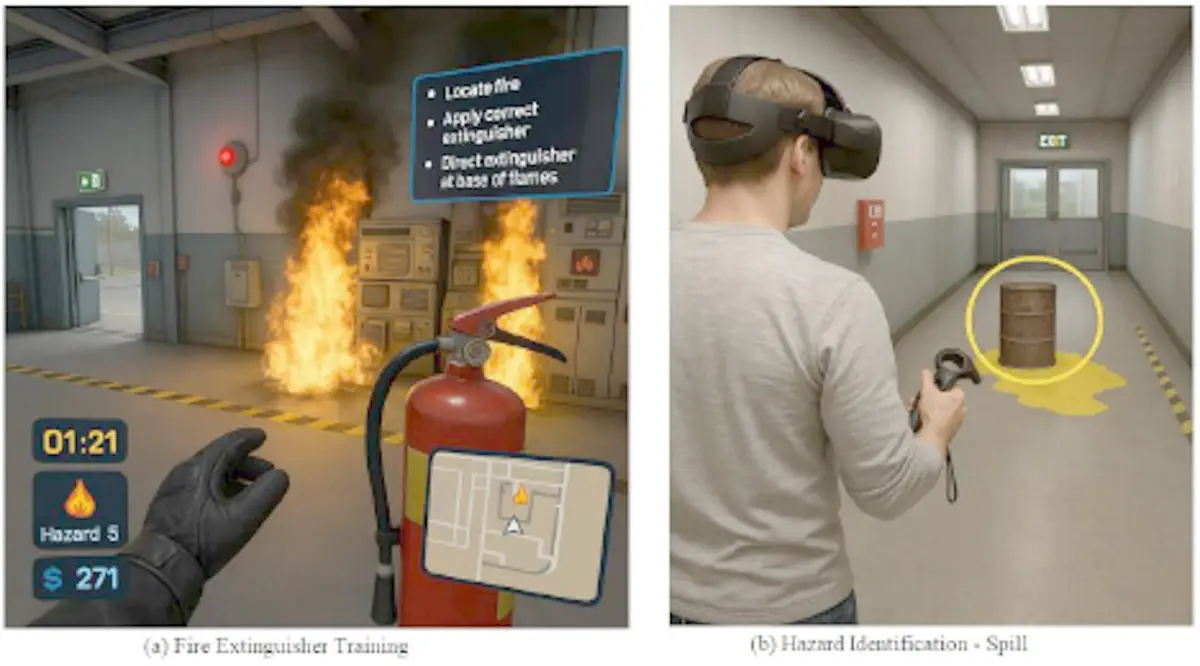
Not long ago, AR and VR were largely associated with gaming and entertainment. Today, they are quietly becoming operational tools across multiple American industries. Businesses are no longer asking if these technologies matter—they’re asking how to implement them effectively.
According to industry reports from organizations like PwC and McKinsey & Company, immersive technologies could add hundreds of billions of dollars to the U.S. economy by improving productivity and reducing operational friction. The shift is driven by better hardware, faster networks, and more practical enterprise use cases.
What’s changed is not just the technology—but the mindset. AR and VR are now tools for solving real business problems.
How AR and VR Are Being Used Across Key Industries
Manufacturing and Industrial Operations
Manufacturing has emerged as one of the strongest adopters of AR and VR in the United States. Companies are using these tools to streamline training, maintenance, and quality control.
Instead of relying solely on manuals or classroom instruction, workers can now: - Use AR headsets to receive step-by-step assembly guidance - Practice complex procedures in VR simulations before touching real equipment - Identify defects through overlay-based visual inspections
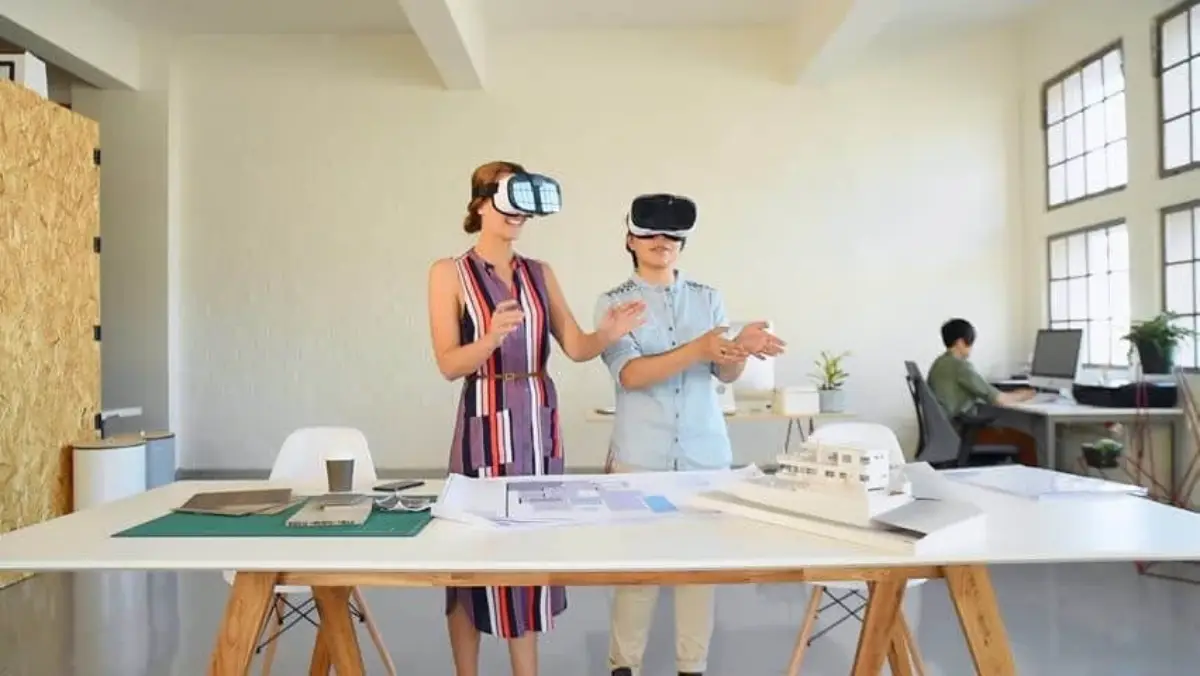
For example, major manufacturers like Boeing have reported improvements in wiring accuracy and reduced training time using AR-based systems.
This matters because manufacturing errors are expensive. Even small efficiency gains can translate into millions of dollars saved annually.
Healthcare and Medical Training
Healthcare is one of the most impactful—and sensitive—areas where AR and VR are gaining traction.
Surgeons are now using VR simulations to rehearse procedures, while AR overlays can assist during operations by displaying patient data in real time. Medical schools across the U.S. are also adopting immersive tools to train students without risking patient safety.
Key applications include: - VR-based surgical simulations for training - AR-assisted diagnostics and imaging visualization - Exposure therapy for mental health treatment
Institutions like Cleveland Clinic have explored VR for both training and patient care, especially in pain management and rehabilitation.
The real value here is risk reduction. Practicing in a virtual environment allows clinicians to refine skills before performing real procedures.
Retail and E-Commerce Experiences
Retailers are using AR to bridge the gap between online and in-store shopping. Instead of guessing how a product might look or fit, customers can now visualize it in their own environment.
Examples include: - Virtual try-ons for clothing, eyewear, and cosmetics - AR-based furniture placement in home settings - Interactive product demos via smartphones
Companies like IKEA have implemented AR apps that allow users to see how furniture fits in their homes before buying.
This isn’t just about novelty—it directly impacts conversion rates and return rates, two critical metrics in e-commerce.
Real Estate and Architecture
AR and VR are reshaping how properties are marketed and designed. Instead of relying on blueprints or static images, stakeholders can walk through spaces before they are built.
Developers and agents are using VR to: - Offer immersive property tours to remote buyers - Showcase pre-construction designs - Help clients visualize renovations
In competitive U.S. housing markets, this can speed up decision-making and reduce uncertainty for buyers.
Architects also benefit from better collaboration. Teams can review designs in a shared virtual space, catching issues earlier in the process.
Education and Workforce Training
Education is undergoing a gradual transformation with immersive learning tools. Schools, universities, and corporate training programs are using AR and VR to improve engagement and retention.
Instead of passive learning, students can interact with content: - Explore historical events in VR environments - Conduct virtual science experiments - Practice real-world skills in simulated settings
Corporate training programs in industries like logistics and aviation are also using VR to reduce onboarding time and improve safety outcomes.
Research suggests that immersive learning can improve retention rates significantly compared to traditional methods—a key advantage in skill-heavy industries.
Why Businesses Are Investing in AR and VR
The adoption of AR and VR is not driven by trendiness—it’s driven by measurable outcomes.
Key Business Benefits - Improved training efficiency: Faster onboarding and better retention - Reduced operational errors: Real-time guidance minimizes mistakes - Lower costs over time: Fewer physical prototypes and training materials - Enhanced customer experience: More informed and confident buyers - Remote collaboration: Teams can work together without physical presence
A study by PwC found that employees trained using VR completed training four times faster than classroom learners in certain scenarios.
For executives, these are not abstract benefits—they directly impact profitability and scalability.

Common Challenges Slowing Adoption
Despite the advantages, AR and VR adoption is not without friction. Many organizations are still navigating practical barriers.
Key Challenges - High initial investment in hardware and software - Integration issues with existing systems - Limited in-house expertise - User resistance or learning curve concerns - Unclear ROI in early stages
For smaller businesses, these barriers can be significant. Even large enterprises often start with pilot programs before scaling implementation.
Another concern is content creation. Developing high-quality AR/VR experiences requires specialized skills, which are still in relatively short supply.
What American Businesses Are Asking Right Now
Across industries, decision-makers tend to ask similar questions before investing in AR and VR: - How long does it take to see ROI? - Which use cases deliver the fastest impact? - Do we need custom-built solutions or off-the-shelf tools? - How do we train employees to use these systems effectively? - What hardware should we choose?
The answers depend heavily on the industry and use case. However, companies that start with clear, measurable goals tend to see better outcomes.

Practical Implementation Strategies
Organizations that succeed with AR and VR tend to follow a disciplined approach rather than jumping in blindly.
Recommended Approach - Start with a specific problem, not the technology - Run a small pilot program before scaling - Choose use cases with measurable ROI - Partner with experienced vendors or consultants - Invest in employee training and change management
For example, a logistics company might begin with VR-based safety training before expanding into warehouse optimization tools.
The key is to treat AR and VR as business tools—not experimental add-ons.
The Role of Emerging Technologies
AR and VR do not operate in isolation. Their effectiveness often depends on integration with other technologies.
Key Enablers - 5G networks for low-latency experiences - Artificial Intelligence for smarter interactions - Cloud computing for scalable deployment - IoT devices for real-time data integration
As these technologies mature, the capabilities of AR and VR will continue to expand.
FAQs: AR and VR in American Industries
1. What is the difference between AR and VR? AR overlays digital elements onto the real world, while VR creates a fully immersive virtual environment. 2. Which industries benefit the most from AR and VR? Manufacturing, healthcare, retail, real estate, and education are currently leading adopters. 3. Is AR/VR expensive to implement? Initial costs can be high, but many companies see long-term savings through efficiency gains. 4. How long does it take to see ROI? Some use cases, like training, can show results within months, while others take longer. 5. Do small businesses use AR and VR? Yes, especially in retail and real estate, where entry costs are lower with mobile-based solutions. 6. Is specialized hardware required? Not always—many AR applications run on smartphones, while VR typically requires headsets. 7. Are there workforce challenges? Yes, training employees and overcoming resistance can be initial hurdles. 8. Is AR/VR secure for enterprise use? Security depends on implementation, but enterprise-grade solutions include robust protections. 9. What skills are needed to develop AR/VR solutions? Skills in 3D modeling, software development, and UX design are commonly required. 10. Will AR and VR replace traditional methods? Not entirely—they are more likely to complement and enhance existing processes.
Where Immersive Tech Is Headed Next
The trajectory of AR and VR in American industries suggests steady, practical growth rather than explosive disruption. As hardware becomes more affordable and software ecosystems mature, adoption will likely expand into mid-sized businesses and new sectors.
The companies that benefit most will be those that approach these technologies strategically—focusing on real problems, measurable outcomes, and user adoption rather than novelty.
AR and VR are not silver bullets, but they are becoming reliable tools in the modern business toolkit.
Key Insights at a Glance
- AR and VR are moving from experimental to operational tools
- Manufacturing and healthcare lead in adoption
- Training and simulation offer the fastest ROI
- Retail uses AR to improve customer decision-making
- Challenges include cost, expertise, and integration
- Strategic implementation is critical for success
FAQs
More Articles
Augmented Reality in Retail: How Virtual Try-Ons Are Boosting Sales
10 min read | 04 Jun 2026

The Potential of VR for Skill Training: From Surgery to Space Exploration
7 min read | 03 Jun 2026

The Integration of AR in Live Events: Enhancing Audience Engagement and Interaction
7 min read | 02 Jun 2026

The Ethics of VR: Exploring the Psychological Impact of Virtual Realities
7 min read | 01 Jun 2026
More Articles

DAOs: Redefining Governance with Decentralized Autonomous Organizations
5 min read | 13 Apr 2026

NFTs: Beyond Digital Art - The Tokenization Revolution
5 min read | 12 Apr 2026

The Metaverse Beckons: How Blockchain Will Shape Virtual Worlds
4 min read | 11 Apr 2026

The Rise of Web3: Decentralized Internet on the Blockchain
6 min read | 10 Apr 2026