
From Rules to Neural Networks: Deep Learning’s Influence on NLP Progress
8 min read
07 Jun 2026
 By Prince Matthews
Natural language processing (NLP) has undergone a significant transformation over the past few decades. What once relied heavily on rigid linguistic rules has evolved into a dynamic, data-driven field powered by deep learning. This shift has enabled machines to better understand, interpret, and generate human language, making everyday technologies more intuitive and effective.
The Early Days: Rule-Based NLP
In its early stages, NLP systems were built on manually crafted rules developed by linguists and engineers. These systems relied on predefined grammar structures, dictionaries, and syntax patterns to process language. While effective for controlled scenarios, they struggled with ambiguity, slang, and variations in human expression. For example, a system might understand a specific command but fail when phrasing changed slightly, limiting its real-world usability.
The Transition to Statistical Methods
To overcome the limitations of rule-based systems, researchers introduced statistical approaches to NLP. These models used large datasets to identify patterns and probabilities in language. Techniques like n-grams and probabilistic models improved tasks such as text classification and speech recognition. However, they still required extensive feature engineering and lacked deep contextual understanding.
The Rise of Deep Learning
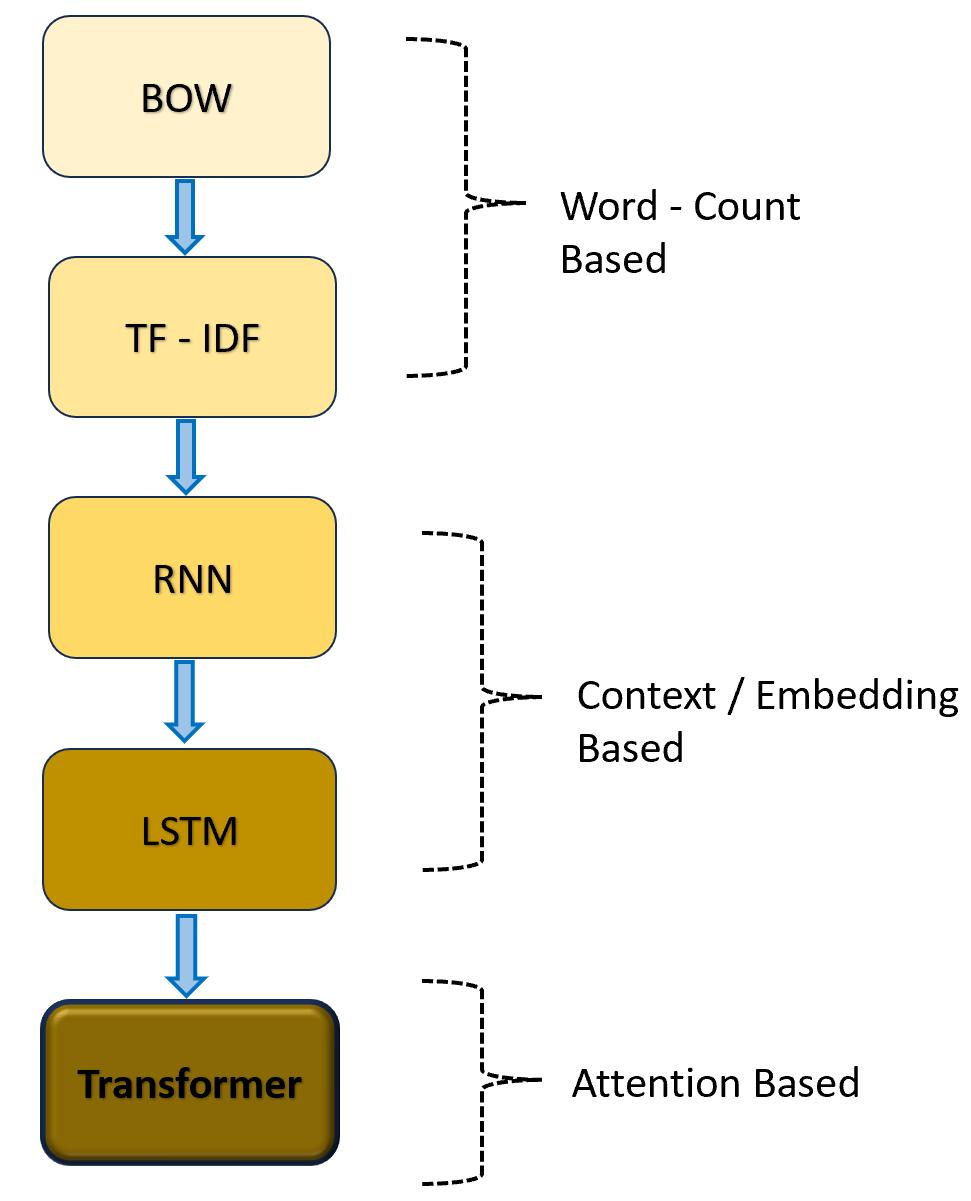
Deep learning marked a turning point in NLP by allowing systems to automatically learn language representations from data. Neural networks, particularly recurrent neural networks (RNNs) and long short-term memory (LSTM) models, enabled machines to process sequences of text more effectively. This advancement allowed systems to better capture context and relationships between words, significantly improving performance across tasks.
Transformers and Modern NLP
The introduction of transformer architectures revolutionized NLP even further. Models like BERT and GPT use attention mechanisms to analyze entire sentences at once, understanding how words relate to each other regardless of their position. This capability allows for more accurate interpretation of meaning, making applications like search engines, chatbots, and translation tools far more effective.
Real-World Applications
Deep learning-powered NLP is now widely used across industries. In healthcare, it helps analyze patient records and improve diagnostics. In finance, it assists with fraud detection and sentiment analysis. Retailers use NLP to personalize recommendations, while customer service platforms rely on intelligent chatbots to handle user queries efficiently. These applications demonstrate how NLP has become an integral part of modern digital experiences.
Why Deep Learning Changed Everything
Deep learning outperforms traditional approaches because it can learn directly from vast amounts of data without relying on handcrafted rules. It adapts to new language patterns, handles ambiguity more effectively, and scales with increasing data availability. This flexibility has made NLP systems more accurate and capable of handling complex, real-world language tasks.

Challenges and Considerations
Despite its advantages, deep learning in NLP presents challenges. Large models require significant computational resources and vast datasets. Additionally, issues such as bias in training data and lack of transparency in decision-making processes raise ethical concerns. Addressing these challenges is critical to ensuring responsible and fair use of NLP technologies.
Conclusion
The evolution from rule-based systems to deep learning has fundamentally transformed NLP, enabling machines to better understand and interact with human language. As advancements continue, NLP will play an even greater role in shaping digital communication and innovation. By balancing technological progress with ethical responsibility, organizations can harness the full potential of NLP to create meaningful and impactful solutions.
FAQs
More Articles

The Quantum Internet: Unbreakable and Superfast Communication
2 min read | 15 Dec 2025

Mind-Reading Technology: The Future of Brain-Computer Interfaces
3 min read | 14 Dec 2025

Electric Vehicles: Revolutionizing the Automotive Industry
4 min read | 13 Dec 2025

Artificial Intelligence in Education: Personalized Learning and Beyond
4 min read | 12 Dec 2025
More Articles

Permissioned vs. Permissionless Blockchains: Which is Better?
4 min read | 15 Mar 2026

Nodes in Blockchain: The Building Blocks of Decentralization
5 min read | 14 Mar 2026

Blockchain Mining: The Backbone of Cryptocurrency Networks
2 min read | 13 Mar 2026

The Immutable Nature of Blockchain: Security and Data Integrity
3 min read | 12 Mar 2026