
Artificial Intelligence in 2026: The Technologies Redefining Business and Productivity
9 min read
02 Jun 2026
 By Sayan Gosh
Artificial intelligence has moved from experimental technology to a core driver of business productivity. In 2026, organizations across industries use AI tools for data analysis, automation, forecasting, and decision support. From customer service systems to predictive analytics and workflow automation, AI technologies are helping companies operate more efficiently while reshaping how professionals collaborate, plan, and manage everyday work.
The Expanding Role of Artificial Intelligence in Modern Business
Artificial intelligence has evolved rapidly over the past decade, but its impact on business operations has become particularly visible in recent years. Organizations increasingly rely on AI tools to automate repetitive processes, analyze large datasets, and support decision-making.
In 2026, AI adoption is no longer limited to large technology companies. Businesses of all sizes—from startups to multinational corporations—use AI-powered platforms integrated into everyday software tools.
Several factors explain this widespread adoption:
Improved access to cloud computing infrastructure Large volumes of digital data available for analysis Advances in machine learning and natural language processing Integration of AI into widely used business software
According to a report from McKinsey & Company, more than half of organizations worldwide now report using AI in at least one business function. The most common applications involve marketing analytics, customer service automation, and operational forecasting.

Rather than replacing human workers, most AI technologies act as productivity tools that support employees in completing tasks more efficiently.
AI-Powered Automation in Daily Workflows
One of the most immediate ways artificial intelligence improves productivity is through workflow automation. Many business tasks involve repetitive processes that follow predictable patterns. AI systems can learn these patterns and perform tasks automatically.
Examples of automated processes include:
Sorting incoming customer support tickets Scheduling meetings and managing calendars Processing invoices and financial records Generating reports from large datasets Organizing and tagging documents
For example, accounting teams increasingly use AI tools that automatically scan invoices, extract relevant information, and update accounting systems. This reduces manual data entry and allows finance professionals to focus on analysis and financial planning.
Similarly, marketing teams rely on AI-powered analytics dashboards to monitor campaign performance in real time. These systems analyze customer engagement data and highlight patterns that might otherwise take hours to detect manually.
Automation does not eliminate the need for employees. Instead, it shifts their focus from repetitive tasks to strategic work that requires judgment and creativity.
Generative AI and Content Production
Another major development shaping business productivity is the rise of generative AI technologies. These systems can create written text, images, and software code based on user instructions.
In professional environments, generative AI tools support tasks such as:
Drafting emails and reports Summarizing lengthy documents Generating marketing content Assisting software developers with code suggestions Translating content across languages

For example, legal professionals sometimes use AI tools to summarize complex case documents before reviewing them in detail. Marketing teams use AI-assisted writing tools to create first drafts of blog posts or product descriptions.
These technologies significantly reduce the time required to complete certain tasks. However, human oversight remains essential. Professionals must review AI-generated material for accuracy, tone, and context before using it in business communications.
The most effective organizations treat generative AI as a collaborative tool rather than a fully autonomous system.
Data Analytics and AI-Driven Decision Making
Businesses generate enormous volumes of data through digital transactions, customer interactions, and operational systems. Artificial intelligence allows organizations to analyze this data quickly and identify meaningful insights.
AI-driven analytics platforms help companies answer questions such as:
Which products are likely to experience increased demand? What factors influence customer retention? Where can operational costs be reduced? Which marketing campaigns generate the highest engagement?
Machine learning models analyze historical data and identify patterns that inform future decisions.
For example, retail companies use predictive analytics to forecast demand for specific products. These predictions help companies manage inventory more efficiently and reduce the risk of overstocking or supply shortages.
Similarly, logistics companies use AI models to anticipate delivery delays and optimize shipping routes.
These predictive insights allow organizations to make more informed decisions while responding more quickly to market changes.
AI in Customer Service and Support
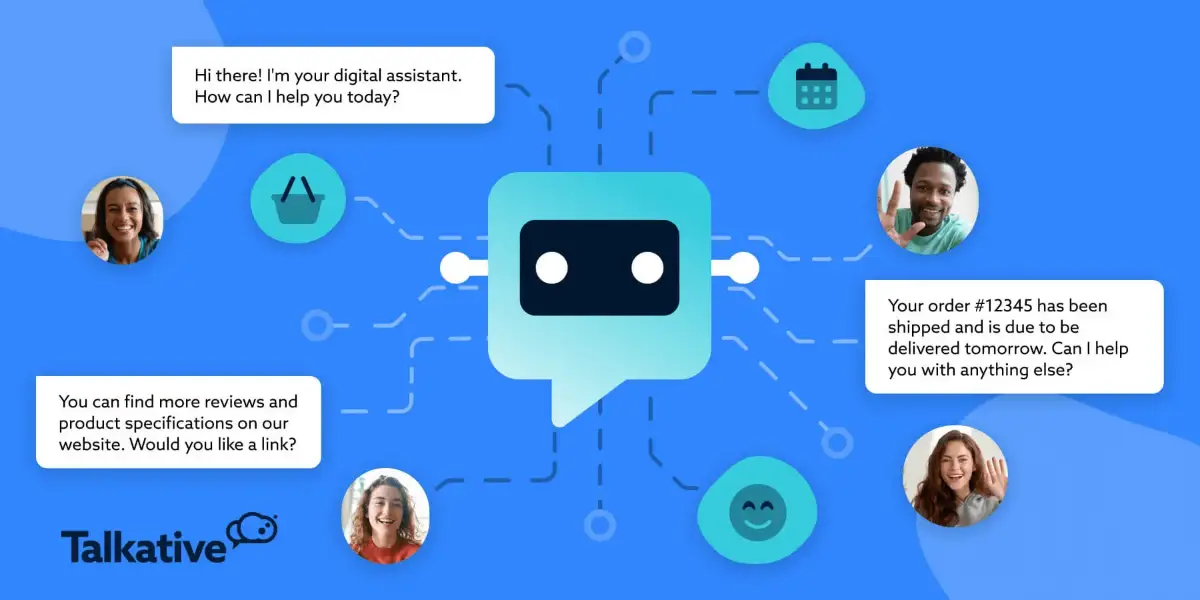
Customer service is another area where artificial intelligence has significantly improved efficiency. AI-powered chatbots and virtual assistants can handle common customer inquiries, allowing support teams to focus on complex cases.
Modern AI customer service systems are capable of:
Answering frequently asked questions Providing order status updates Guiding users through troubleshooting steps Routing requests to appropriate support teams
Many companies deploy AI chat systems on websites and mobile apps to provide immediate responses to customer questions.
While these systems cannot replace human representatives in every situation, they significantly reduce response times and improve service availability.
Customers often receive basic assistance instantly rather than waiting in long support queues.
AI and Business Forecasting
Forecasting is a critical component of business planning. Artificial intelligence improves forecasting accuracy by analyzing large datasets and identifying subtle trends.
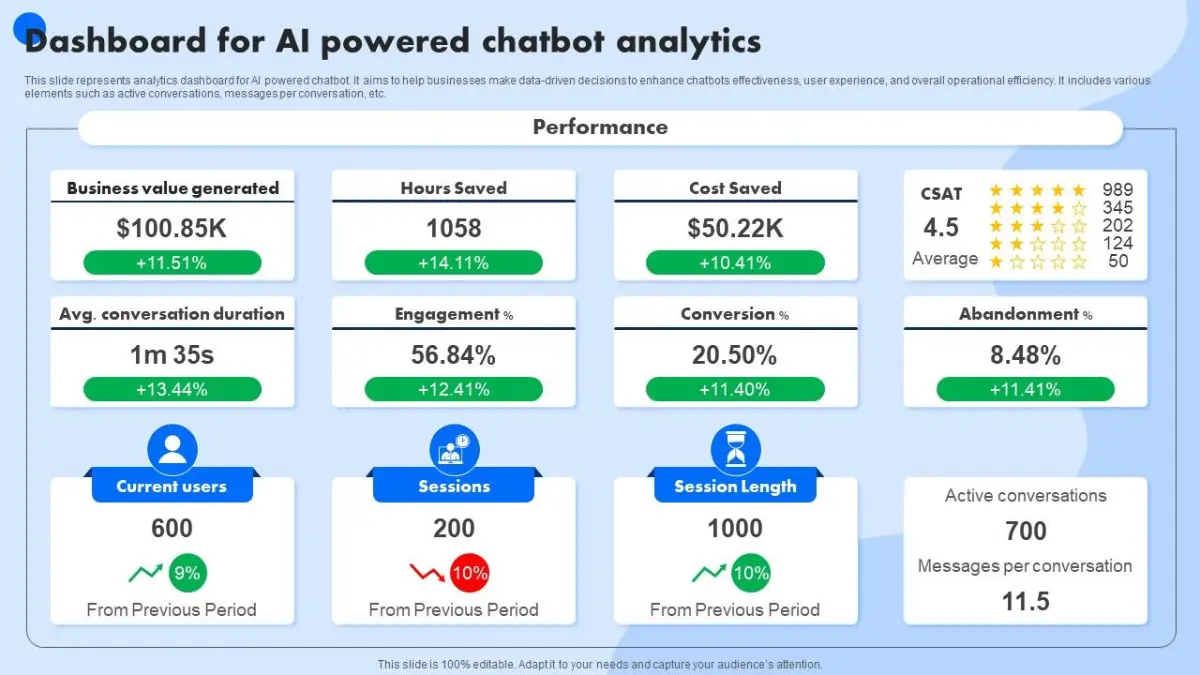
AI-powered forecasting tools help organizations predict:
Product demand trends Market fluctuations Customer purchasing behavior Workforce requirements Supply chain disruptions
For instance, an e-commerce company may use AI to predict seasonal shopping trends. By analyzing historical sales data and external variables such as weather patterns or regional demand, the system can forecast likely product demand weeks in advance.
Accurate forecasts allow businesses to allocate resources more efficiently and respond quickly to changes in market conditions.
AI-Supported Collaboration Tools
The shift toward remote and hybrid work has increased the importance of digital collaboration tools. Artificial intelligence now supports many of these platforms by automating meeting notes, summarizing conversations, and organizing tasks.
AI features in collaboration platforms often include:
Automatic transcription of video meetings Identification of action items in discussions Smart scheduling suggestions Document recommendations based on project context
For example, after a virtual meeting, AI software may generate a summary that includes key decisions and assigned tasks. Team members who missed the meeting can quickly review these notes rather than watching the entire recording.
These tools improve communication and help distributed teams stay aligned.
Ethical Considerations and Responsible AI Adoption
As artificial intelligence becomes central to business operations, organizations must address ethical considerations related to data privacy, transparency, and fairness.
Responsible AI practices typically involve:
Monitoring algorithms for potential bias Protecting sensitive customer data Maintaining human oversight for critical decisions Providing transparency about automated processes
Several regulatory frameworks are emerging worldwide to guide responsible AI development. In the United States, regulatory agencies continue to evaluate policies related to algorithmic transparency and consumer data protection.
Companies that adopt clear governance policies are more likely to build trust with customers and employees while benefiting from AI-driven innovation.
Frequently Asked Questions
What is artificial intelligence in business? Artificial intelligence in business refers to the use of machine learning systems and algorithms to automate processes, analyze data, and support decision-making.
How does AI improve productivity? AI automates repetitive tasks, analyzes data quickly, and provides insights that help employees make faster and more informed decisions.
What industries use AI the most? Industries with large data volumes—including finance, healthcare, retail, logistics, and technology—are among the most active adopters of AI technologies.
Can small businesses benefit from AI? Yes. Many cloud-based platforms now provide AI tools for marketing analytics, customer support automation, and inventory forecasting.
Is generative AI reliable for professional use? Generative AI can assist with drafting and summarizing content, but professionals must review outputs carefully for accuracy and context.
How do AI chatbots improve customer service? Chatbots can handle basic inquiries instantly, reducing wait times and allowing support teams to focus on more complex issues.
Will AI replace office jobs? Most experts expect AI to automate specific tasks rather than replace entire professions. Many jobs will evolve to include oversight of AI systems.
What are the risks of using AI in business? Potential risks include data privacy concerns, algorithm bias, and overreliance on automated recommendations without human oversight.
How does predictive analytics work? Predictive analytics uses machine learning models to analyze historical data and identify patterns that help forecast future trends.
Where Human Expertise and Intelligent Systems Meet
The evolution of artificial intelligence in business is not simply about automation. It represents a shift toward collaboration between human expertise and intelligent systems.
Employees provide context, judgment, and strategic thinking, while AI tools process large datasets and automate routine tasks. Together, these capabilities create more efficient workflows and better-informed decisions.
Organizations that successfully integrate AI technologies often focus on training employees to use these tools effectively rather than treating them as replacements for human talent.
In 2026 and beyond, the most productive workplaces will likely be those where human insight and machine intelligence work together.
Indicators of the AI-Driven Workplace
AI adoption is expanding across marketing, finance, logistics, and customer service Workflow automation is reducing repetitive administrative tasks Predictive analytics is improving planning and forecasting accuracy Generative AI tools support content creation and documentation Ethical oversight and governance are becoming central to AI deployment
FAQs
More Articles

Carbon Capture Technology: Combatting Climate Change
4 min read | 14 May 2026

Emotional AI: Machines that Understand Human Emotions
5 min read | 13 May 2026

Human Augmentation: Enhancing Abilities with Technology
6 min read | 12 May 2026

Photonic Computing: Light-Based Data Processing
7 min read | 11 May 2026
More Articles

The Evolution of Mobile Technology: From 4G to 6G
5 min read | 06 Feb 2026

Tech Solutions for Accessibility: Enhancing Lives for People with Disabilities
5 min read | 05 Feb 2026

AI in Content Creation: From Writing to Visual Arts
6 min read | 04 Feb 2026

Tech Innovations in Supply Chain Management
7 min read | 03 Feb 2026